
From performance to brand desire: Porsche marketing strategy (1948-2000)
- Published: 23/02/2026
- 16 minutes read
From performance to brand desire: Porsche marketing strategy (1948-2000)
- Published: 23/02/2026
- 16 minutes read
This part of the case study represents the first chapter in the sequence of Porsche’s marketing strategy focused on its early foundations through the strategic positioning of the Porsche 911 and its marketing approach during the 1980-2000 era.
Key learning objectives
1. Understand how Porsche’s early marketing strategy focused on pure engineering-centric messaging.
2. Examine how Porsche successfully positioned itself as a brand that transcends product categories while maintaining authentic performance credibility through consistent narrative themes and heritage storytelling.
3. Analyze the strategic decisions Porsche made to position the 911 as the ultimate luxury car.
Abstract
Porsche is an iconic automotive brand in the industry, transitioning from the producer of small quantities of racing cars to a company representing the luxury lifestyle worldwide. Its marketing strategy has evolved over the decades, adapting to changes in consumer behavior, the media environment, and competition. The brand’s market positioning shifted from motorsport dominance and classic performance ads to luxury positioning and emotional engagement. This case study analyzes how Porsche’s marketing strategy has shifted, from a performance-centric focus to today’s emotionally appealing, purpose-led storytelling and highly integrated digital ecosystems. We will focus on their marketing strategy and storytelling, analyzing their ads from the beginning until 2000.
Overview of Porsche
Founded in 1931 as an engineering office by Ferdinand Porsche¹, the Porsche company defined its identity through technical innovation long before it became a vehicle manufacturer. He and his team developed the concept that later became the Volkswagen Beetle in the 1930s, establishing a long-standing technical relationship between Porsche and Volkswagen. In 1948, Porsche presented its first sports car, the Porsche Type 356 No. 1 Roadster. That was when the brand was born-a symbol of exclusive sports cars. For this car, Porsche also used Volkswagen components, reflecting strong technical and industrial ties between the two companies. In 2012, Porsche officially became part of the Volkswagen Group. Since the beginning, motorsport has been a central part of Porsche’s marketing strategy, shaping it and reinforcing a culture of precision, endurance, and maximum performance under extreme conditions. The brand’s long-term identity and marketing strategy had been defined when Porsche launched the 911 back in the 1960s. Decades afterward, Porsche slowly evolved the 911, balancing innovation and continuity rather than reinventing its core. All this allowed the brand to remain relevant to modern tastes while retaining a strong, recognizable character.
From the “Driving at its best” slogan emphasizing the high speeds and handling of its 356 model, targeting the brand’s connections to racing and thrill-driving enthusiasts, to “Driven by dreams,” which broadens the scope to include other racing aspects beyond driving, Porsche’s slogan shift has continuously kept the Stuttgart-based firm relevant while making its history an ongoing marketing success. However, in 2025, ‘There is no substitute’ returned, not as a slogan, but as a shared belief. “A spirit to wear, speak and live by²” as stated on the official Porsche website. While today the Porsche logo is a badge of luxury, it was originally based on the “Coat of Arms of the Free People’s State.” The inspiration for the logo was due to the fact that the Porsche logo was created during a time of war³.
Today, Porsche uses its heritage as a strength, not nostalgia. By staying authentic, the brand remains desirable, premium, and relevant across generations.

Introduction
Porsche is one of the most admired and legendary automobile brands in the world. While most other automotive brands market their products based on practical applications and cost-effectiveness, Porsche doesn’t. It sells dreams and freedom and is associated with genuine driving pleasure. The true beauty and ingenuity of the Porsche brand lie in how well it allows owners to view their products as reflections of their personalities.
Porsche's early marketing strategy
In its early decades, Porsche built its brand through a deliberate prestige-driven marketing strategy. The company had emphasized print advertising in auto magazines and racing achievements rather than TV advertising.
The performance-driven nature and high-end status of brands like the Porsche 356 were further embedded by closely tying racing success to these cars, as evidenced by the class wins at Le Mans since 1951. Here, motorsport is utilized as a key strategy to support the Porsche brand message of technology and reliability without necessarily discussing sales.
Porsche’s preceding ‘print first’ ads plan took advantage of high-impact advertising in publications like Sports Cars Illustrated, which would eventually evolve into the Car and Driver magazine. These ads were very visual, showing the Porsche 356’s lines. The ads also employed brief, confident ad copy to reinforce themes like speed, control, and the company’s engineering confidence with emotion-driven themes like excitement and prestige.
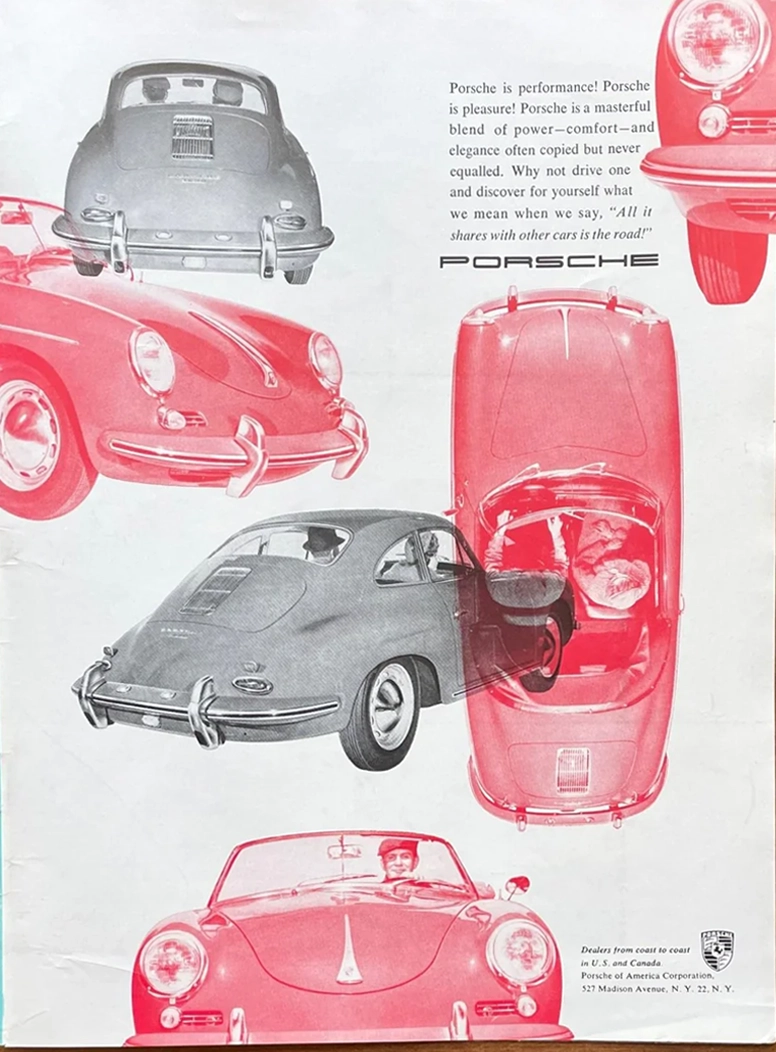
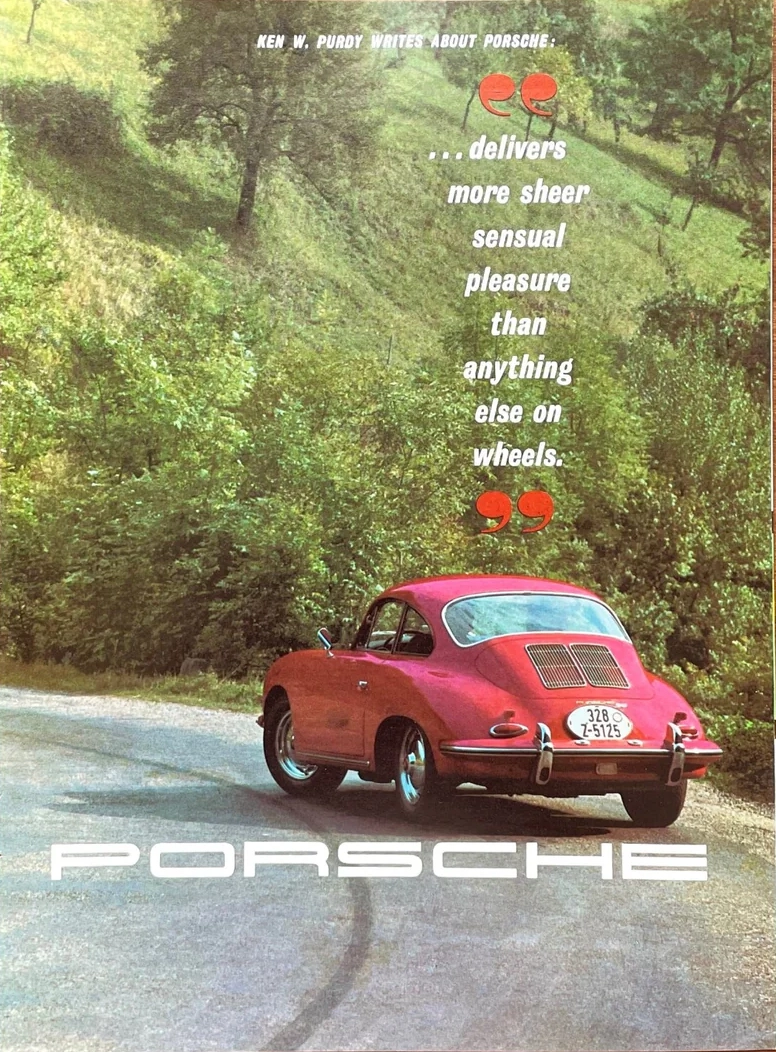
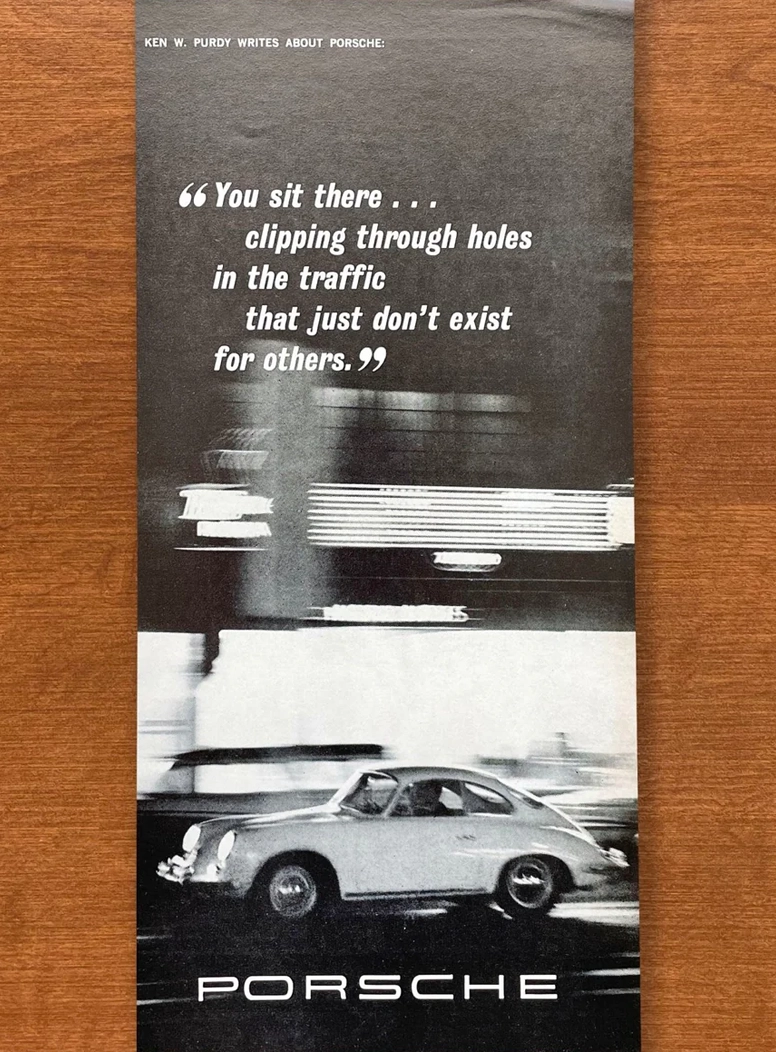
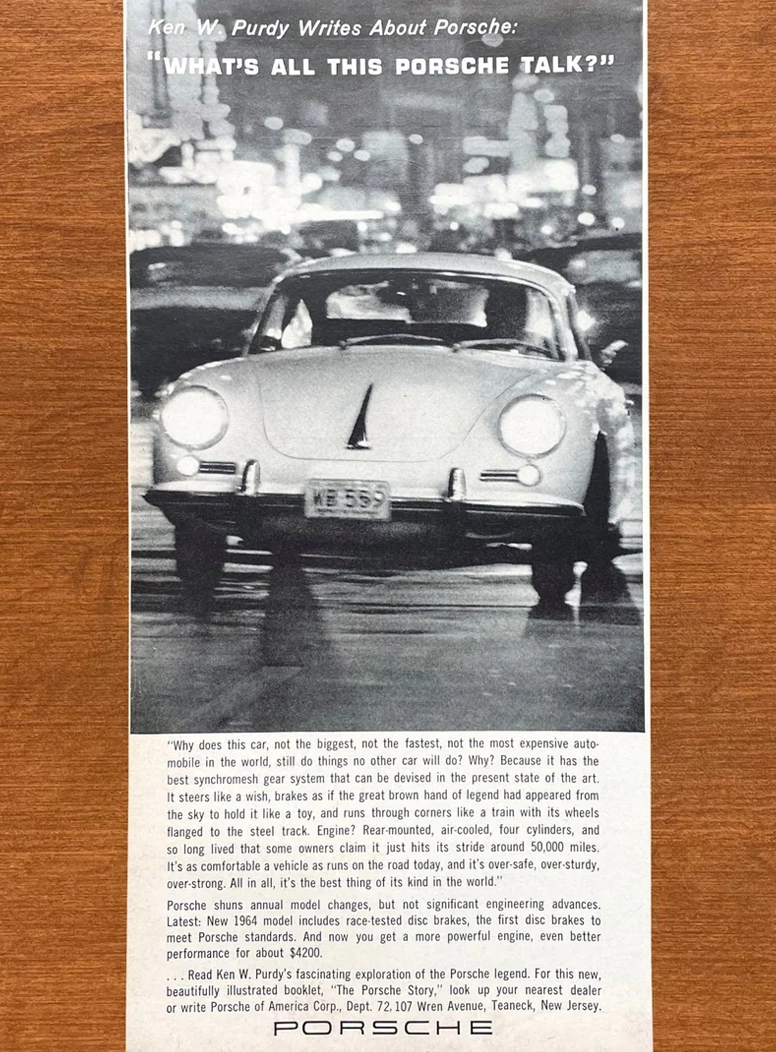
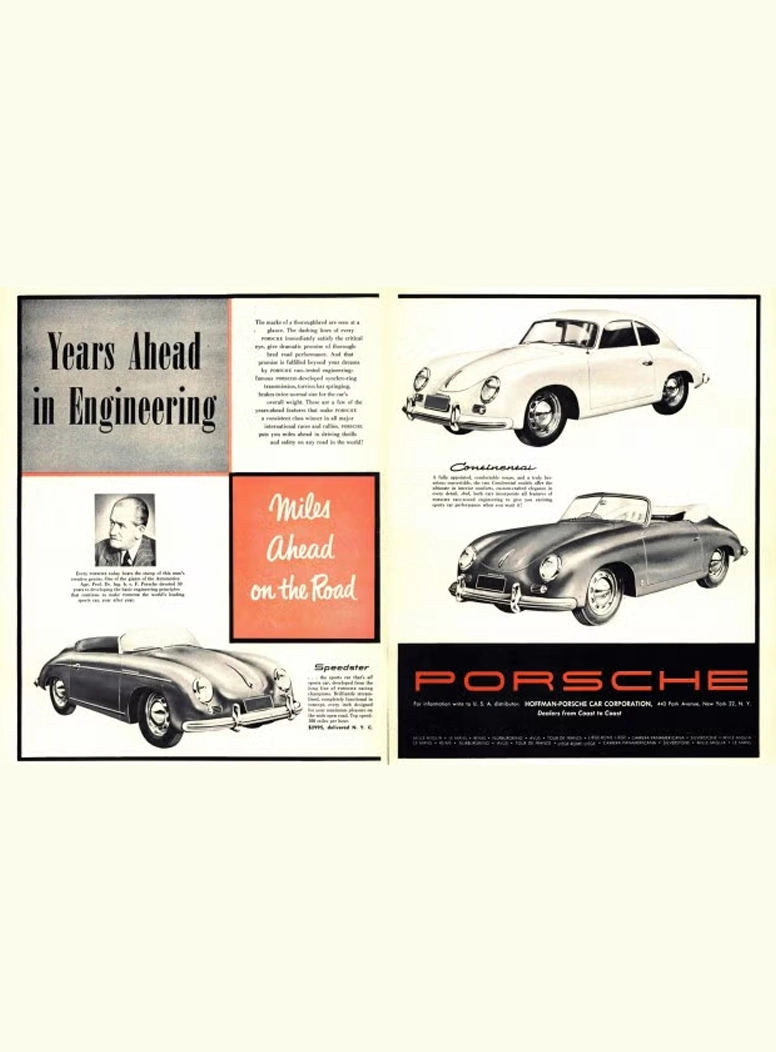
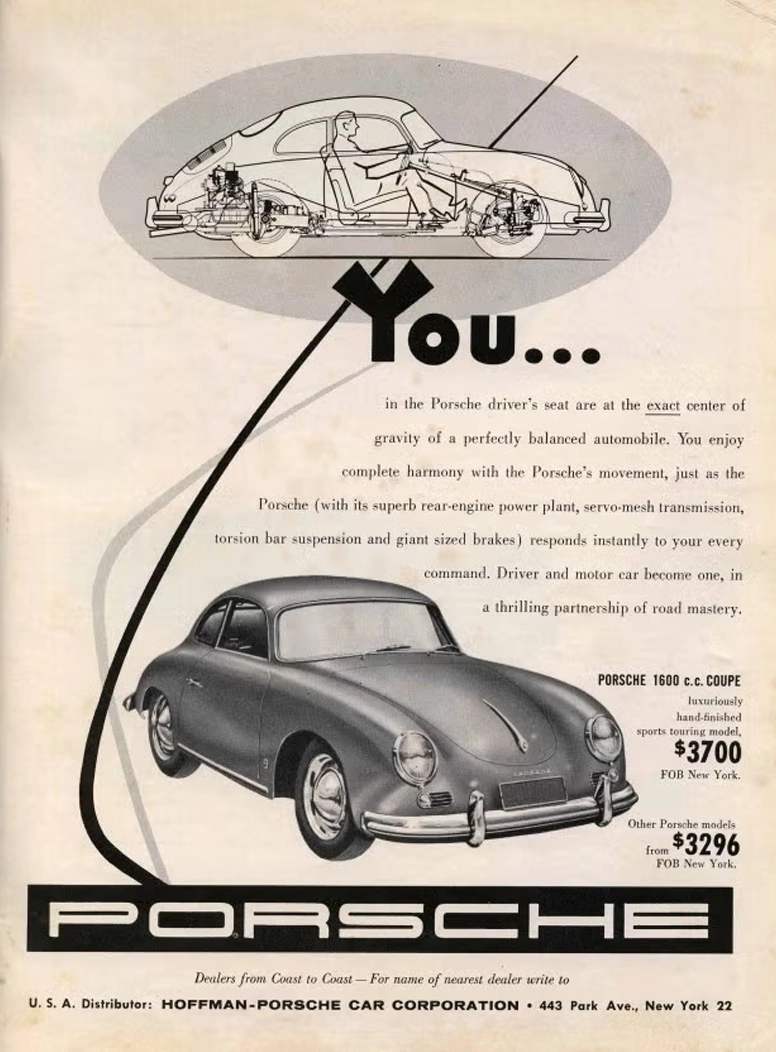
Porches ads and the copy they focused on their early marketing strategy can be best explained in their ad for 356 from 1963.
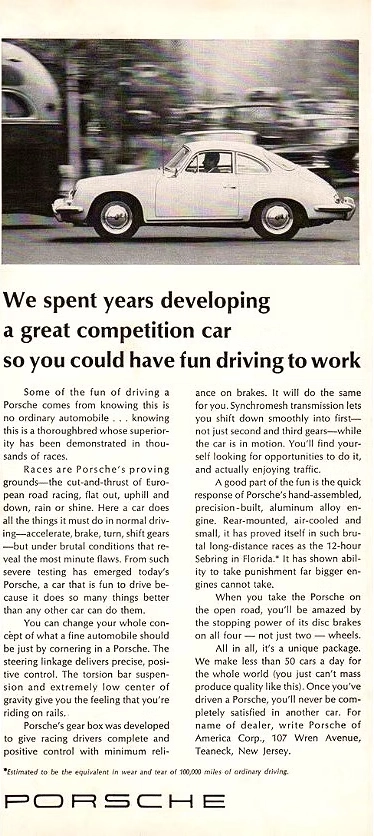
The copy opens with: “We spent years developing a great competition car so you could have fun driving to work.” It positions Porsche engineers as selfless heroes, and the passion is poured into the precision engineering, from aluminum bodies to wide racing slicks to superior suspension, creating from track triumphs a street-legal racer. This hero’s journey culminates in the driver’s reward that driving becomes a thrilling escape, evoking childlike excitement and happiness.
It plays on universal wishes for fun, exclusivity (“not just a second and third gear”), and validation (“created precisely this way”). The counterpoint – laborious development versus easy delight – makes the reader picture themselves smiling from behind the wheel. The copy here is short; punchy sentences build rhythm, and contrasts heighten drama. “We make less than 50 a week for the whole world,” the ending implies scarcity. Unlike the competitors, which had separated race cars from road models in their communications, Porsche blurred the line between motorsport and consumer ownership. The brand hinted that buying a 356 was to buy into racing heritage and legitimacy, thereby turning competitive success into a brand equity engine.
It’s the same narrative they used in the commercials, too.
This commercial, featuring Mr. Porsche himself as the narrator, is part of their marketing strategy that is still in place today. The storytelling avoids discussing or highlighting features, prices, or performance. Rather, it shows that the brand itself is not the product, but part of something bigger. It shows the Porsche as obsessive, disciplined, and goal-oriented, so that people can relate to that as being the same way about themselves.
The commercial evokes aspiration generated by silence. It expresses confidence through engine tone. This creates a level of psychological aspiration because the car doesn’t represent transportation only. Engineering is sold as romance, heritage as authority, and ownership as belonging. Long before the brand storytelling phenomenon, Porsche solved the problem that most other car brands have difficulty with today.
Also, organic word of mouth and cultural visibility helped expand Porsche’s brand awareness. High-profile ownership, including public figures associated with Porsche cars, contributed to earned media and aspirational appeal, reinforcing their premium positioning without heavy mainstream advertising spend. Porsche’s early marketing strategy demonstrates a focused approach centered on authority, authenticity, and selective exposure, showing that prestige, when paired with credible performance narratives, can outperform mass visibility.
Porsche produced around 76,313 units of the 356 from 1948-1965, an impressive figure for a hand-built sports car without major centralized marketing⁴. Success stemmed from dealer networks like Max Hoffman (East Coast importer) and Johnny von Neumann (West Coast racer/dealer) building enthusiast communities, print ads in magazines emphasizing engineering, and, of course, probably the most based on racing wins, positioning it as a performance sports car⁵.
The Porsche 911 - Birth of a legend
The Porsche 911 was presented at the Frankfurt Motor Show in 1963 under the name 901, but was later renamed 911 due to trademark infringement by Peugeot. Their marketing strategy continued to focus on print ads, highlighting the car’s rear-engine layout and race handling at events like the Targa Florio. Their marketing strategy was based on promoting Porsche through race victories, with over 4,000 races won by 1980. As the 911 evolved over the years, from basic 2.0L engines to more powerful Turbo models, Porsche’s advertising campaign focused on technological advancement while maintaining its iconic status. During the fuel crisis of the 1970s, when sports cars were criticized for their performance, Porsche’s advertising strategy shifted to emphasize the 911’s efficiency, robustness, and reliability. In this way, the 911 was positioned as both exciting and sensible, an unbeatable sports car that could adapt to changing times without losing its identity⁶. Their buyer personas were aged 35-55. They valued craftsmanship, technical knowledge, and driving authenticity. Campaigns positioned Porsche as an exclusive choice for discerning enthusiasts under the tagline “Porsche: The Sports Car for the Connoisseur.”
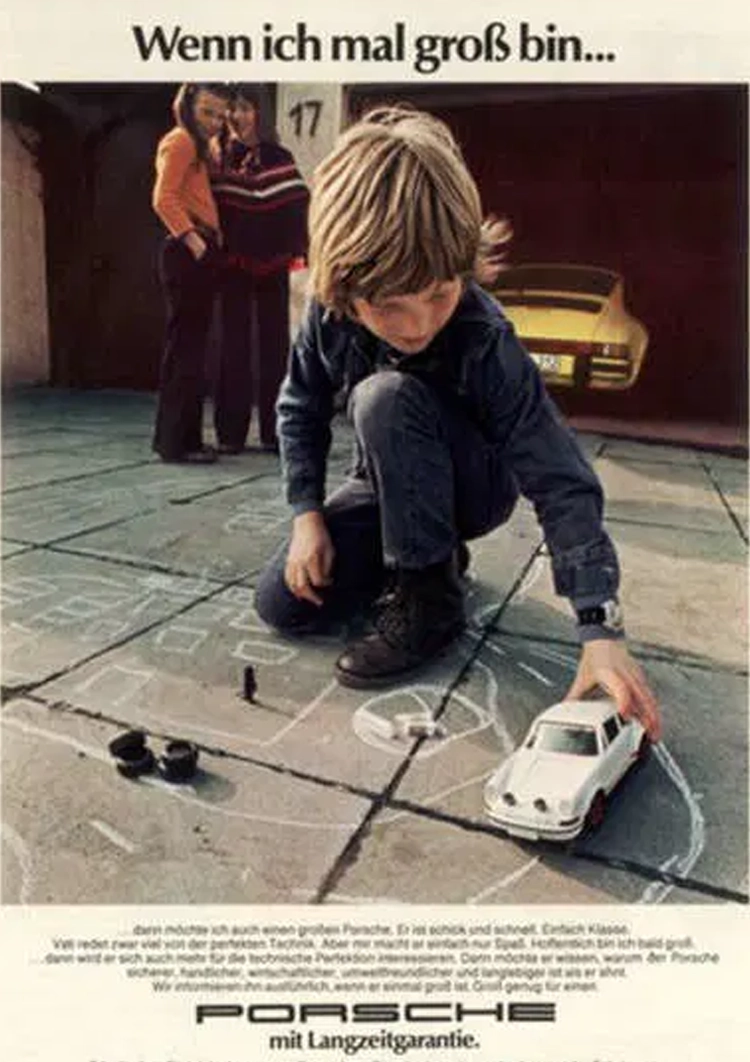
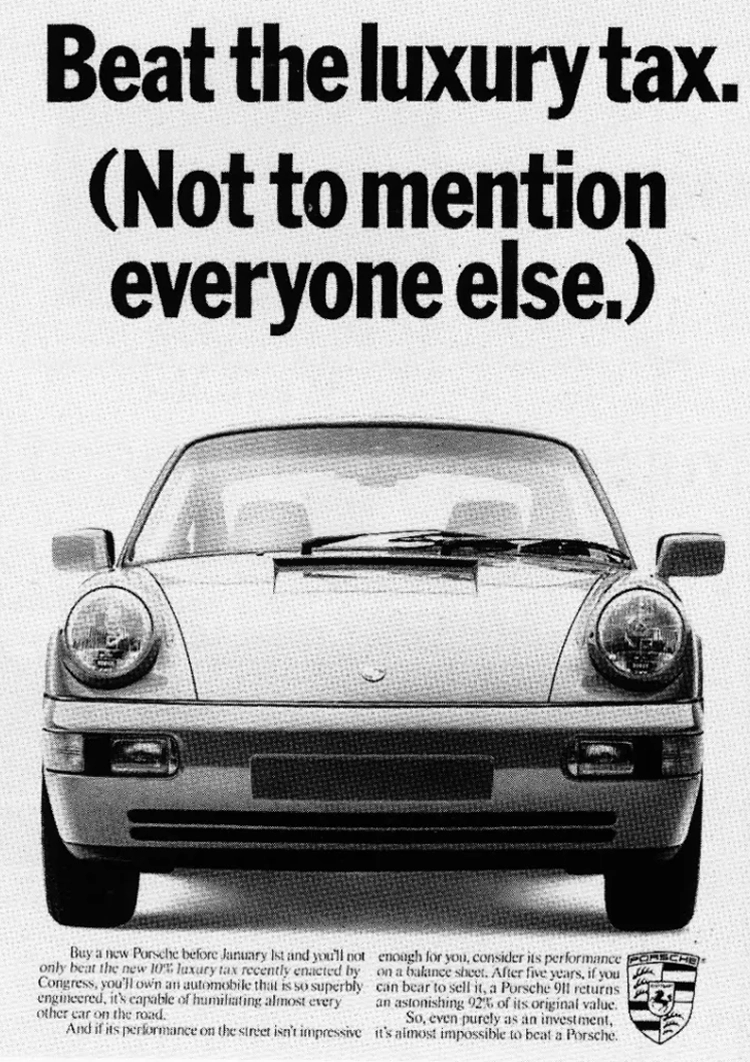
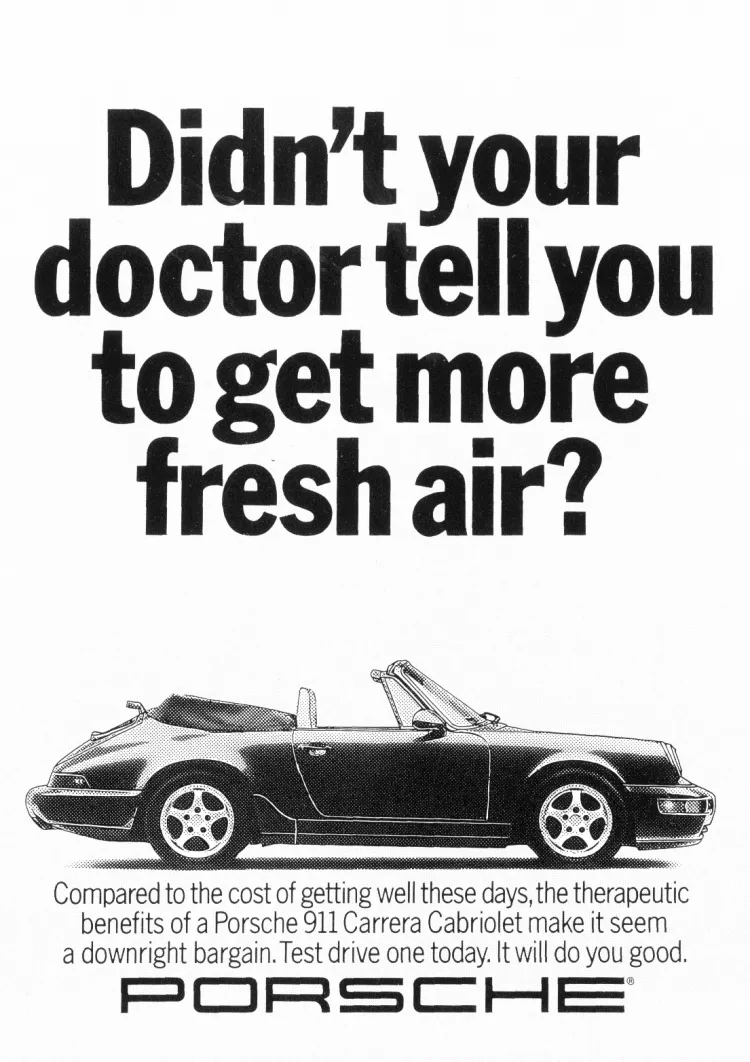
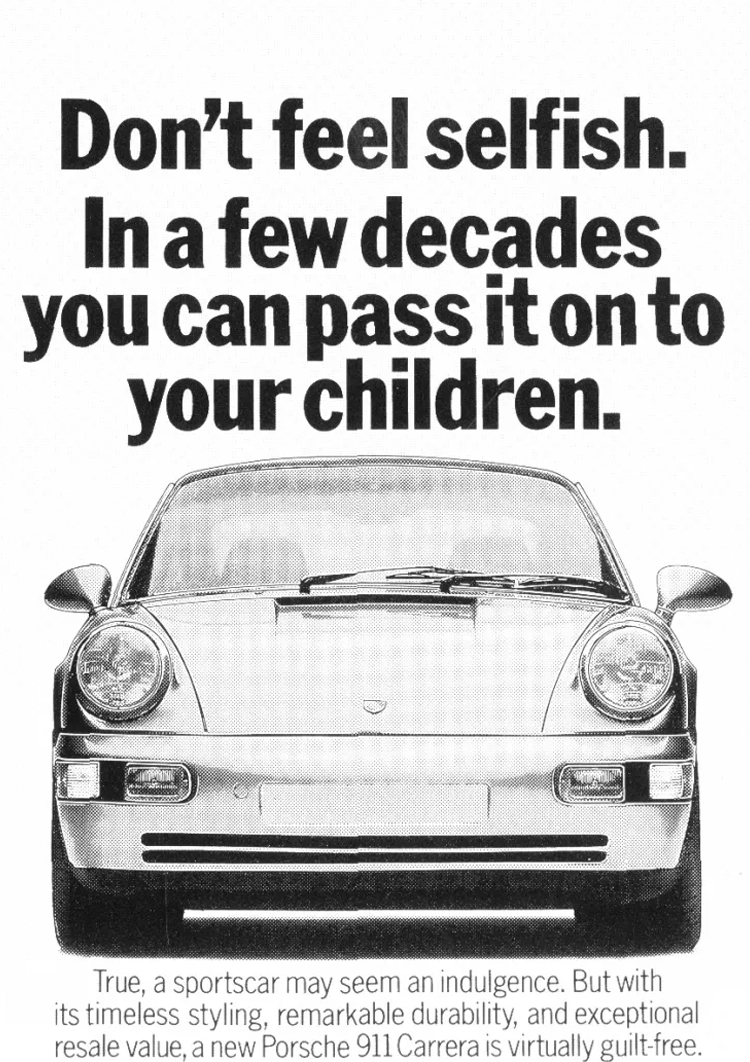
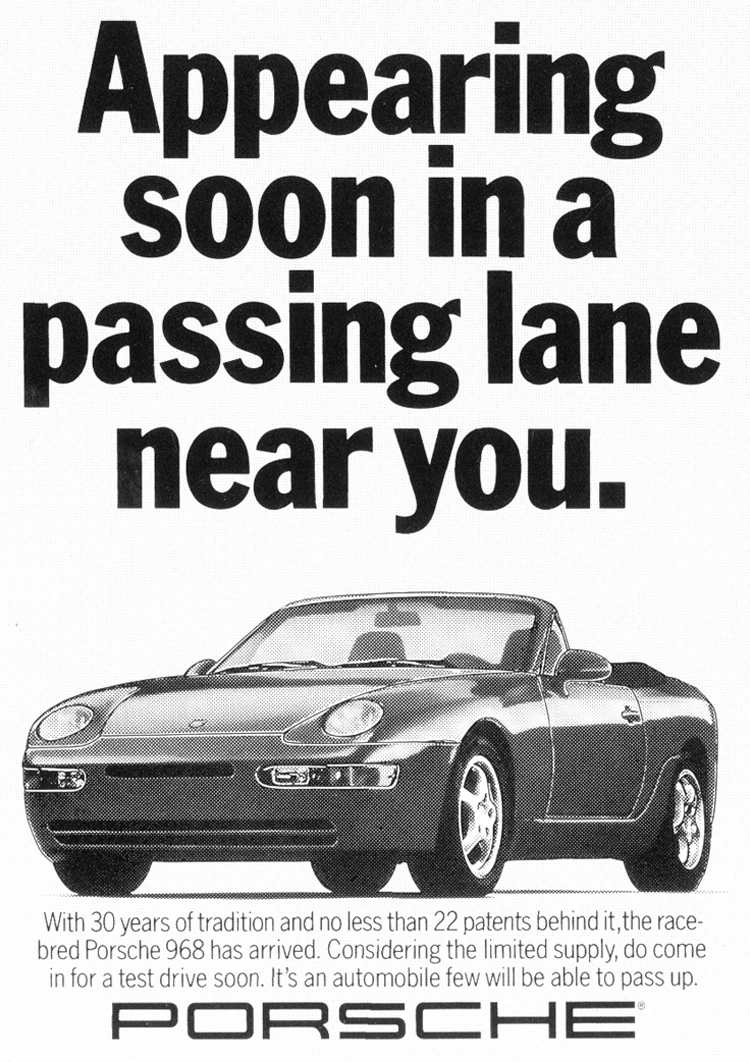
During the decade of the oil crisis and the “limits to growth“, Porsche ads changed; they became more descriptive, more explicative.
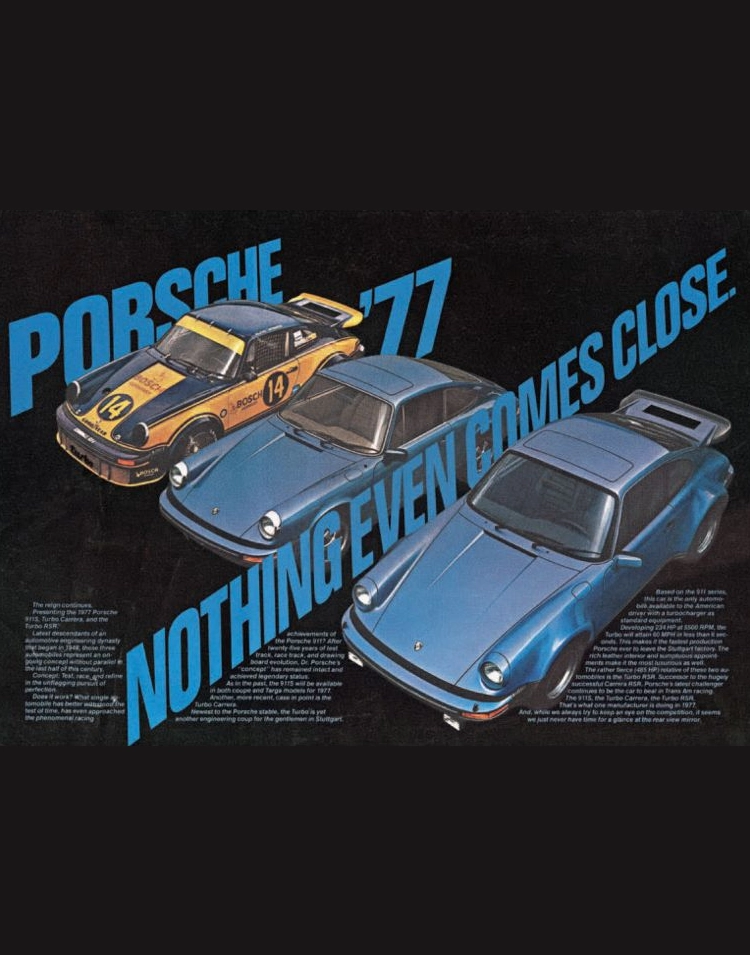
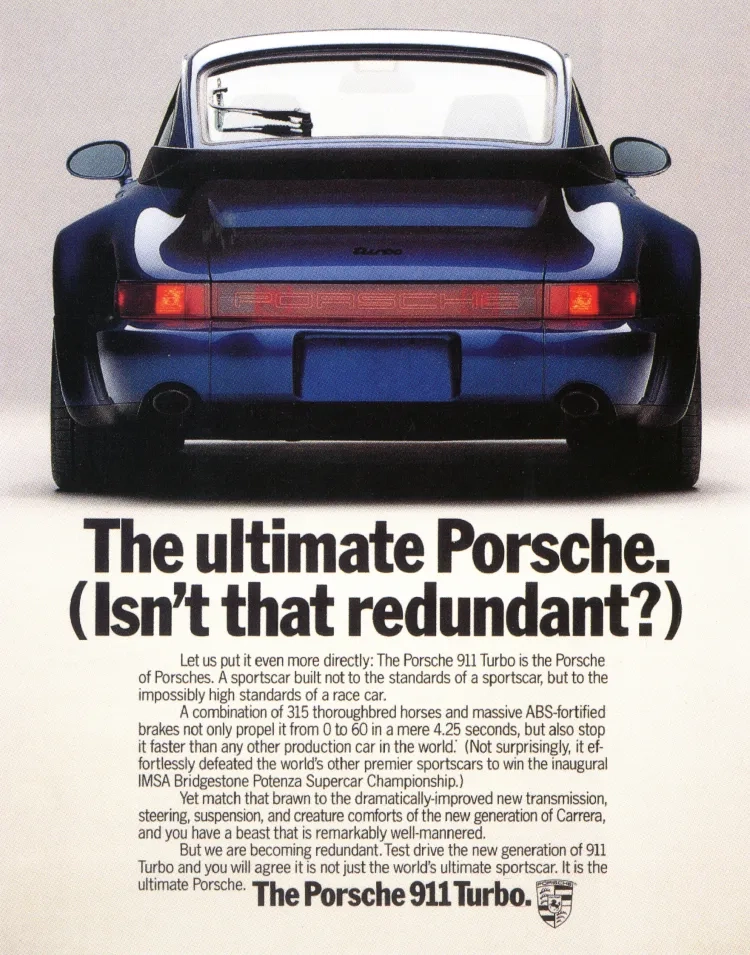
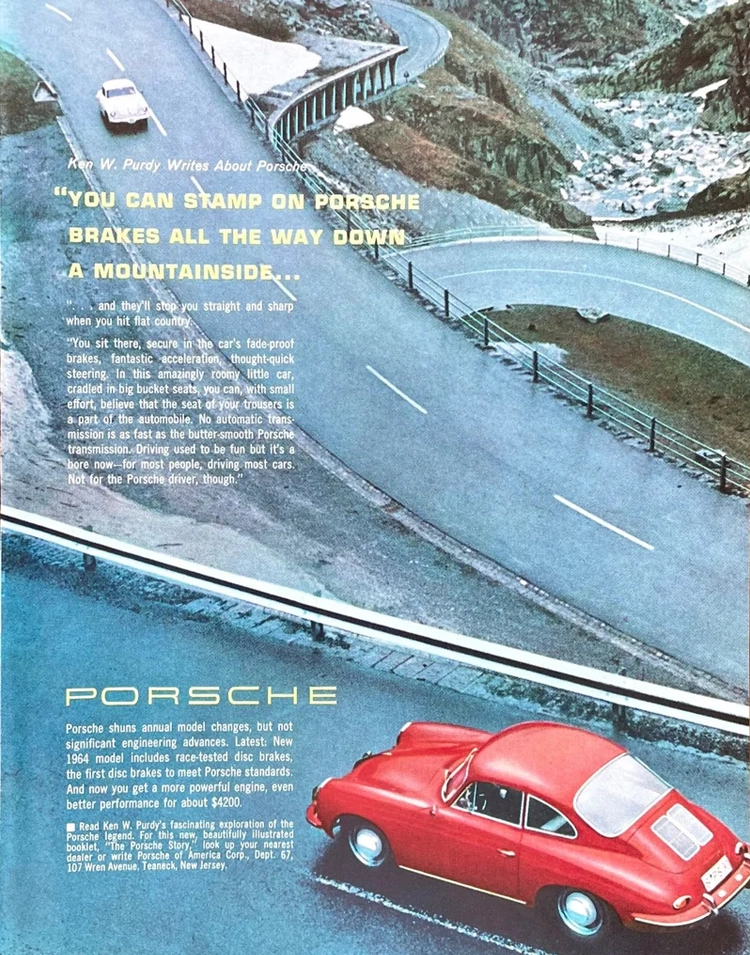
During this period, their copy shifted to connect to their worried buyer personas. Porsche spoke directly to anxious buyer personas facing fuel shortages and economic constraints, offering the 911 as a symbol of inner strength and endurance. They shifted from speed boasts to practical details like 20-25 mpg efficiency, urban handling, and race-proven toughness, framing the car as a reliable partner through tough times. This marketing strategy, focused on emotional connection, sold resilience over metal, boosting loyalty and sales.
Until 2017, the total number of 911 units produced reached 1 million, so we can say 911 Becomes Cultural Icon⁷.
During the decade of the oil crisis and the “limits to growth“, Porsche ads changed; they became more descriptive, more explicative.
During this period, their copy shifted to connect to their worried buyer personas. Porsche spoke directly to anxious buyer personas facing fuel shortages and economic constraints, offering the 911 as a symbol of inner strength and endurance. They shifted from speed boasts to practical details like 20-25 mpg efficiency, urban handling, and race-proven toughness, framing the car as a reliable partner through tough times. This marketing strategy, focused on emotional connection, sold resilience over metal, boosting loyalty and sales.
Until 2017, the total number of 911 units produced reached 1 million, so we can say 911 Becomes Cultural Icon⁷.
However, in the late 70s, they started placing beautiful women next to their cars, and that was the beginning of decades-long sexualization of women in their car advertising.


One of the great examples of their shifting to longer copy is the ad “Schenll. Faster than schnell”. Schnell in German is fast. So what did they do here?
In this ad, Porsche delivers its message through essential content rather than loud horsepower declarations to attract attention. The wordplay is subtle but deliberate: English outpaces German, logic outperforms tradition, and engineering outsmarts ego. This advertising campaign targets a specific market segment because it serves as an assessment tool for determining who belongs to that group. Porsche uses the car joke as a test to see whether you understand the vehicle. The advertisement builds a specific self-image that the viewer should perceive themselves through. The product attracts people who want to display their intelligence and sophistication and who wish to become superior to others. The buyer persona receives special treatment as they become part of an exclusive group. The writing demonstrates absolute confidence through its presentation. The copy doesn’t contain loud assertions and excessive details. The copy presents a single statement that explains that Porsche transforms speed into intelligent humor, performance into distinctive character, and a basic print advertisement into a personal symbol.
Porsche for the next generation
Porsche’s 1980-2000 marketing strategy mastered storytelling by promoting technical facts as the foundation for emotional connection. Every horsepower figure, 0-60 time, and dollar amount served as proof points validating the emotional promise: ownership transforms identity. This period’s copy didn’t sell cars; it sold the transformation from observer to participant in a legacy that was not for everyone, something like a prestige club. Porsche survived the recession by making buyers feel brilliant for choosing engineering over status symbols. They relied on three key marketing pillars:
- Engineering transparency – facts-first copy showcased specs like 20-25 mpg efficiency.
- Audience expansion – targeting young professionals and women.
- Heritage continuity – every model linked back to the racing legacy.
This sold 600k+ units when competitors crashed, creating emotional moats wider than performance gaps.
This marketing strategy is evident in ads and commercials promoting the cars. During this period, they pioneered storytelling that forged deep connections through aspirational narratives of independence and balance.
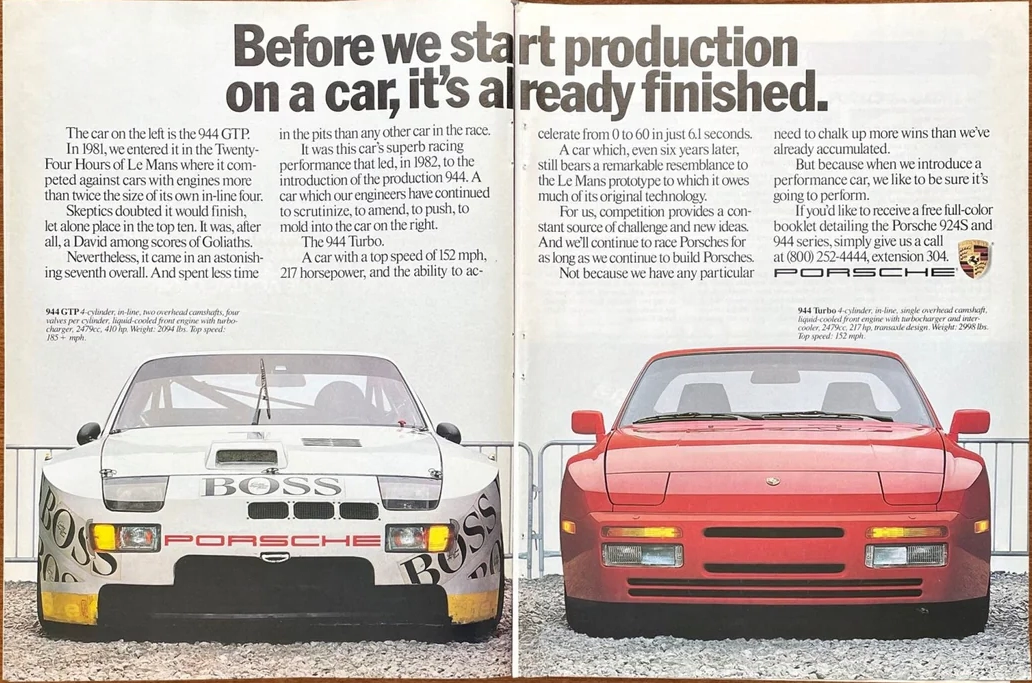
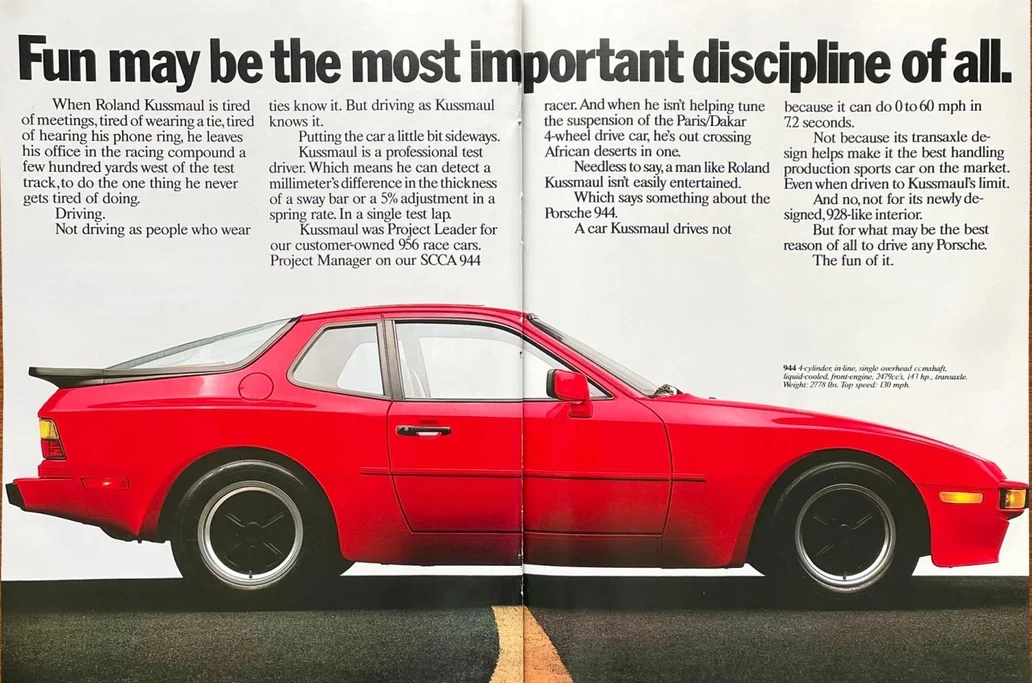
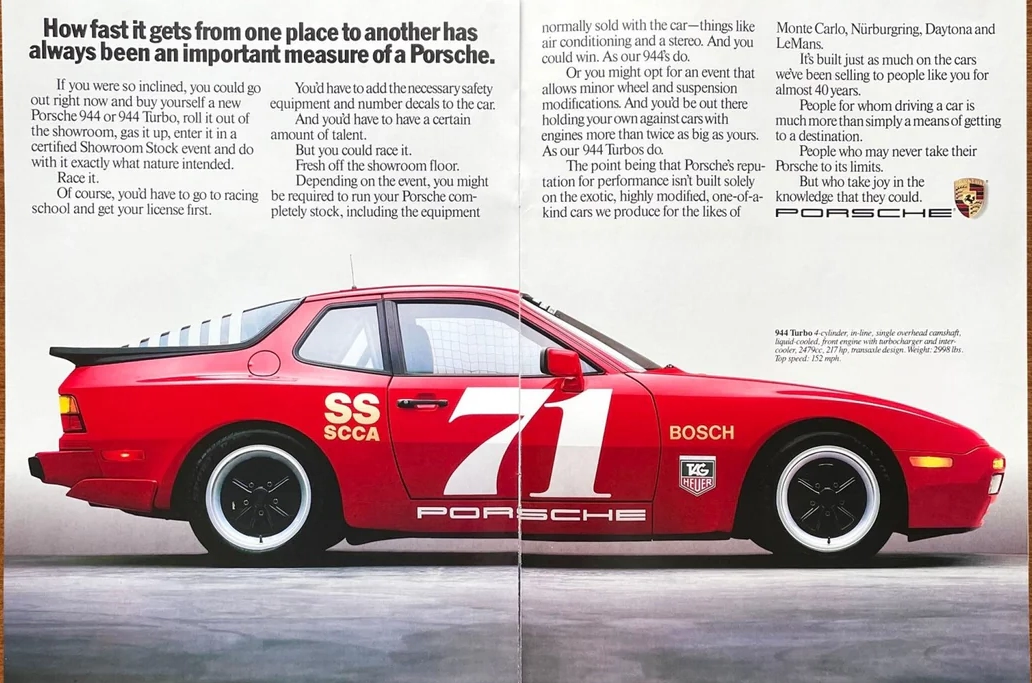
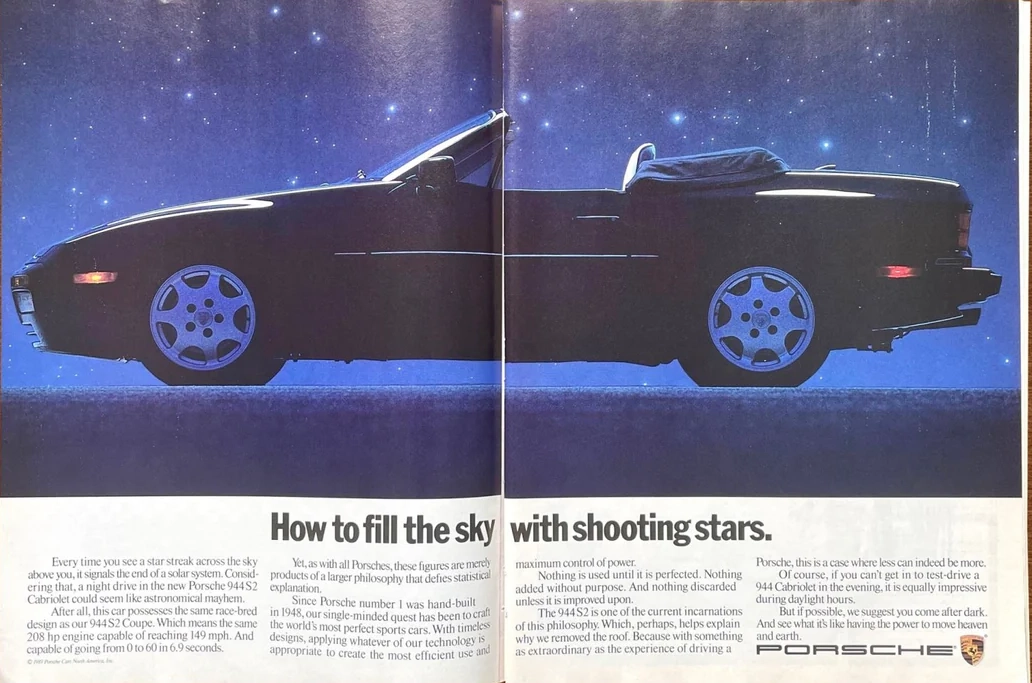
One of the best ads during this period is definitely the 944 ad.
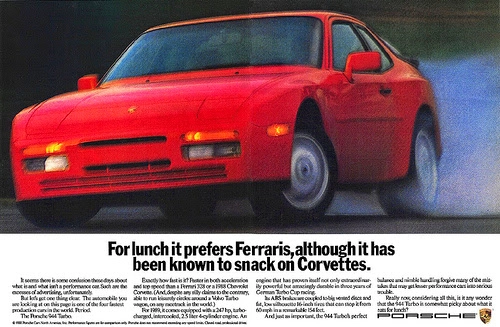
Porsche’s cheeky 1988 print ad shows the 944 Turbo facing off against Ferrari, using predatory humor to forge emotional superiority and brand swagger as part of its marketing strategy. “For Lunch It Prefers Ferraris.” The headline is bold and positions the 944 Turbo as a hungry predator devouring exotic prey, Ferrari. The goal of the copy was to create a feeling in the buyer persona that it is not about driving, but dominating.
The copy flatters ambitious drivers, blending practicality with exclusivity – “…one of the four fastest production cars in the world.” This ad is a great example of building triumph-through-smarts bonding: buyers feel special, tapping envy and validation for value-driven winners. The storytelling presents the car as a loyal beast and, at the same time, a reliable partner in real life.
During this period, Porsche embraced TV commercials as its primary advertising medium to showcase its vehicles, featuring cars racing at high speeds and operating in high-end settings. The commercials showed cars driving through both active road conditions and peaceful, high-end environments, creating stories about the excitement of fast driving and the personal experience of leaving behind everyday life. People developed strong desires to own a Porsche because, through their commercials, they created a mindset that owning one would transform the buyer persona’s entire way of life. The advertisements developed into legendary durability stories that displayed human strength and success metaphors. The initial dedication process created a deep connection between drivers and the brand by replicating the internal strength people possess and increasing product sales through emotional connection, turning viewers into enthusiastic supporters.
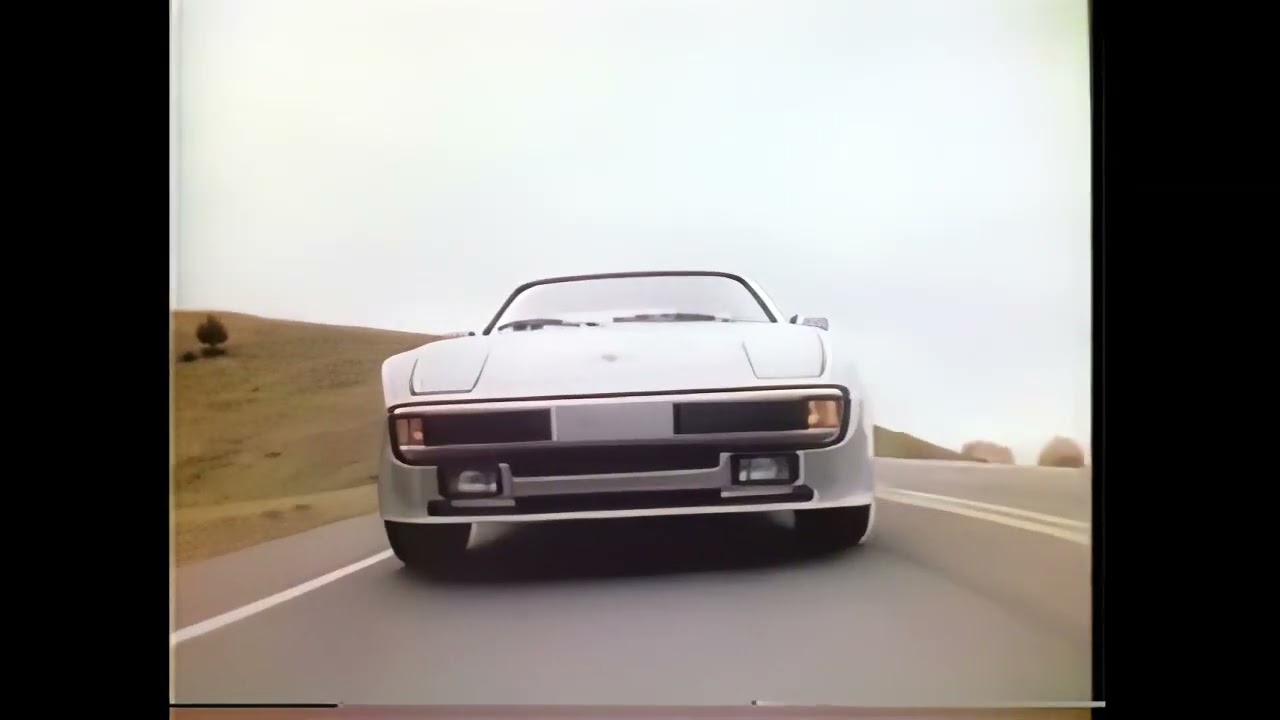
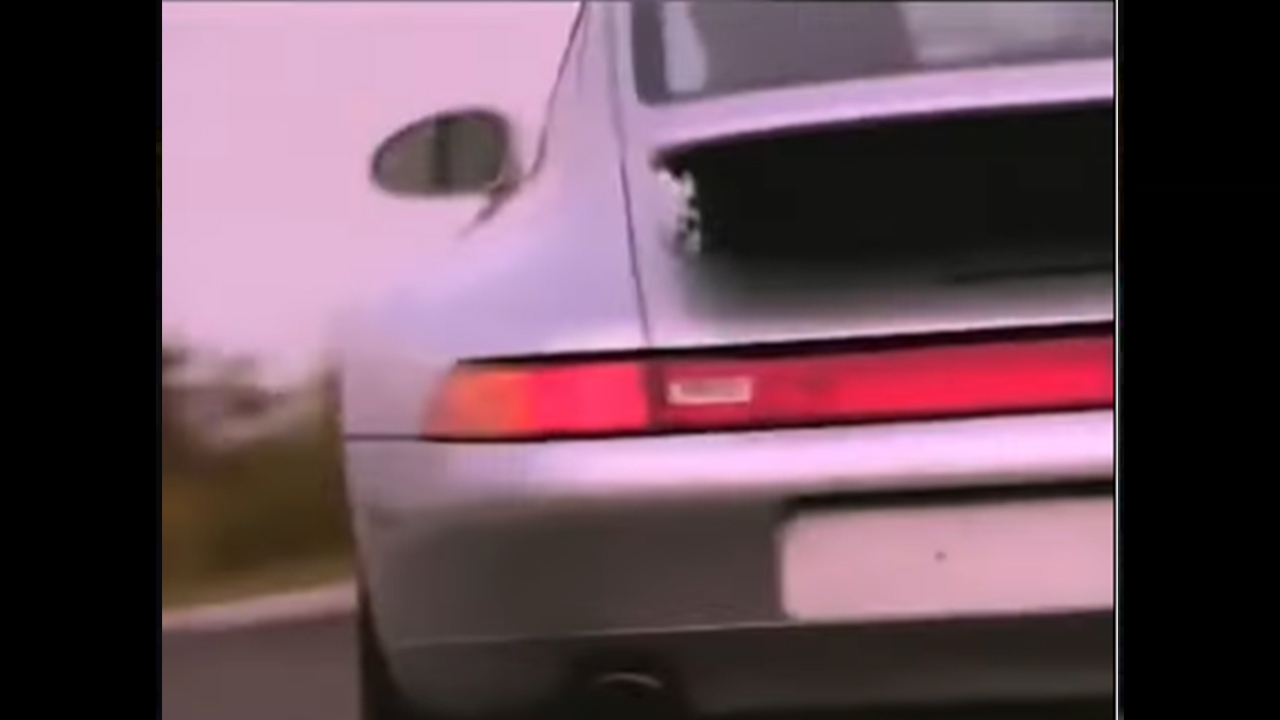
Their approach is best shown in the “Valet Parking” commercial for the 993 (911).
In this commercial, they cleverly used humor to reinforce the iconic slogan “There is no substitute”, targeting affluent buyers by highlighting the car’s speed. Narrated by Patrick Stewart, the commercial opens with two identical 911s leaving the factory: one for the Le Mans 24-hour race, the other for “a quieter life in America.” The couple comes to the restaurant, and valets take the owner’s car, not to park it, but for a joyride. It connects racing DNA to everyday thrills, culminating in the slogan “There is no substitute.” The valets’ joyride brings them smiles and fun, showing viewers how Porsche’s magic sparks pure joy for anyone behind the wheel. It turns the brand’s prestige into something approachable, inviting everyone to share in the excitement of that one-of-a-kind drive. The commercial evokes pride and love for cars that wow us daily, blending race-bred passion with everyday joy to forge a bond that nothing else can match.
With the internet and digital media rising, Porsche’s marketing evolved again in the 1990s and early 2000s. The company launched its first website in 1994, which provided customers with a way to explore Porsche’s product line and learn more about the brand⁸. Porsche also began to experiment with digital marketing, using email campaigns, social media, and online ads to reach new audiences and build brand awareness.
Conclusion
Porsche’s early marketing strategy was built on precise audience targeting, performance-driven positioning, and brand authenticity. From the very beginning, Porsche targeted driving enthusiasts who preferred engineering excellence and motorsport heritage, and all their marketing activities were focused on the preferences of their buyer persona. The company used its printed materials, including magazine spreads, brochures, and posters, to showcase its engineering expertise and racing heritage to specific vehicle enthusiasts during its first decades. The introduction of television enabled Porsche to use motion and sound and weave emotional elements into its storytelling, helping it transform its motorsport heritage into products that appealed to buyer personas.
Their marketing strategy for the Porsche 911 represents a shift toward storytelling and emotional connection with the buyer personas, positioning the car as a symbol of heritage, innovation, and driving excitement. Between 1980 and 2000, Porsche maintained its premium market position through exclusive customer experiences, targeted advertising, and controlled messaging, which established the brand as luxurious with a heritage and the 911 as the main source of income for its product line. Porsche established its brand identity through three essential elements: strategic direction, brand consistency, and deep audience research, rather than pursuing business growth through increased production.
References: